
Why We’re Starting With the Menu
A café can get busier and earn less. Here’s what Chefo is building, and why it starts with the menu.
Sasha, founder of Chefo ·
Hey, I’m Sasha, founder of Chefo. I’m building Chefo to help café owners understand what’s happening in their business and make better decisions as things change.
The long-term vision is an AI back office that understands your café: what you serve, how you prepare it, what it costs, who your customers are, and what’s happening around you.
The work customers never see
Running a café involves a lot of work that customers never see.
- Supplier prices arrive in emails.
- Recipes live in spreadsheets, notebooks, or someone’s head.
- Your team coordinates in chats.
- Sales sit in another system.
Bringing all of that together takes time. And the person who needs to make sense of it is often also behind the bar, taking orders, or covering a shift.
Why a café can get busier and earn less
There are plenty of tools helping businesses attract customers and sell more. But growth needs economics that work. If an order costs more to make and fulfil than it brings in, selling more of it makes the problem bigger. That’s why we’re starting with the menu.
What a supplier price rise does to your menu
The economics of a café menu change even when nobody touches it. Supplier prices move. The café next door reprices. Ingredients get close to their use-by date. More customers start ordering delivery.
The menu stays where it was, while what you earn from each item changes underneath it. But a change in cost doesn’t automatically mean you should change your prices.
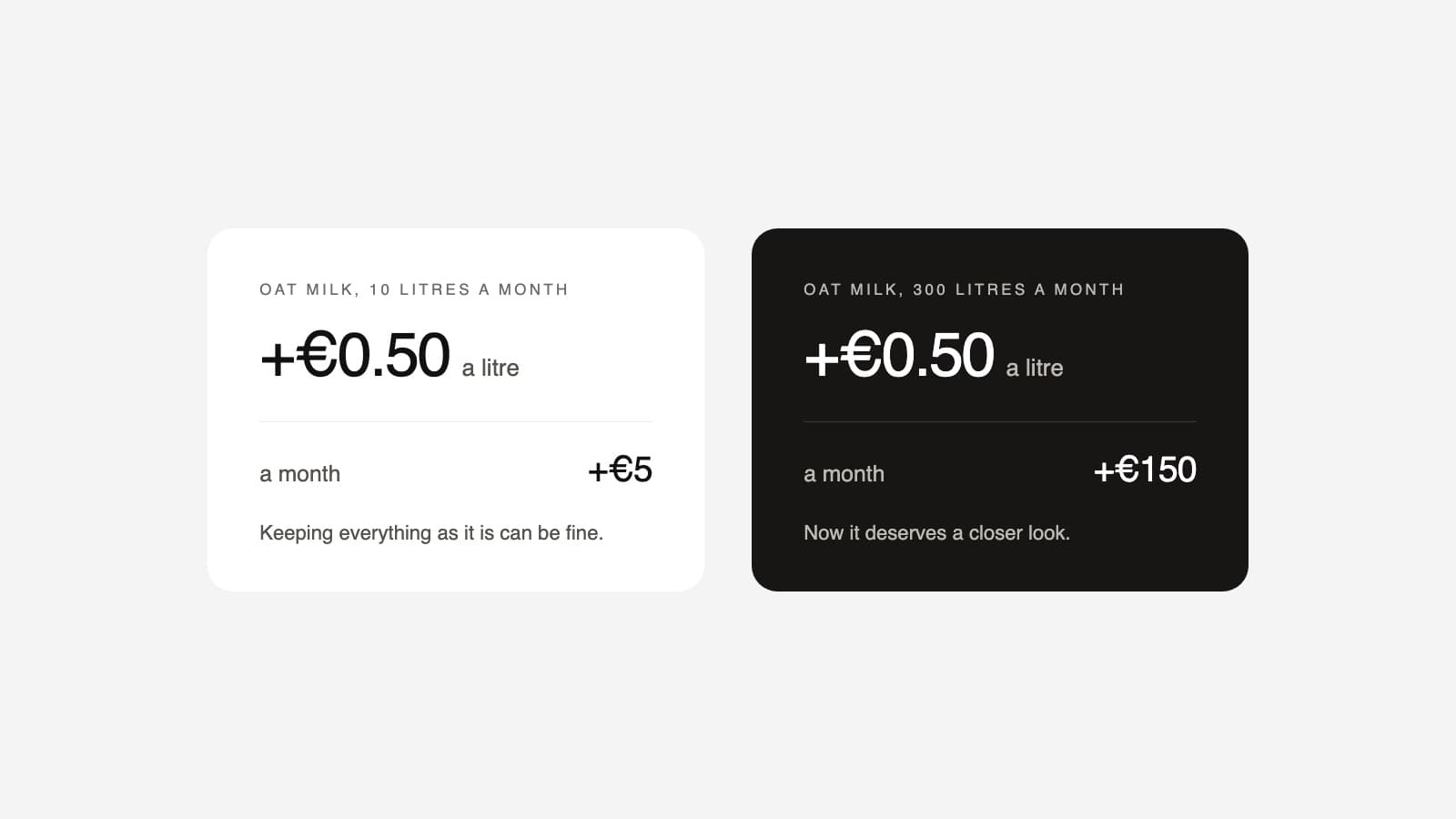
Take oat milk, which I wrote about in my first note from the side of a single latte. Say your supplier adds fifty cents to the price of a litre.
If you buy ten litres a month, that’s another five euros. Keeping everything as it is might be a perfectly reasonable decision.
If you buy three hundred litres, that’s another hundred and fifty euros every month. Now it deserves a closer look: another brand, a different surcharge, or keeping the milk your customers love and absorbing the cost. A cheaper milk might taste or foam differently, and another plant milk changes the drink and its allergens.
The right decision depends on what you serve, how much you sell, and what your guests value.
When the street changes
Sometimes the change happens outside the café. Imagine roadworks start on your street, and fewer people walk past your door. You decide to explore delivery and preorders. That changes what your menu needs to do.
- Which items travel well?
- How much is left after packaging and delivery fees?
- Can your team handle those orders alongside the customers in the café?
Even the cup becomes a different decision. The premium packaging you chose when delivery was occasional might be expensive at a larger volume. A simpler option could make sense, provided it still keeps the drink secure and arriving in good condition.
The circumstances changed. Your menu and the way you serve it need to be able to respond. That’s what I mean by a living menu: one that adapts when things around the café change.
What a menu item is made of
To make those decisions, we first need to understand the small details each item is built from:
- the ingredients and quantities
- the recipe and its yield
- preparation time and complexity
- waste
- what you serve it in
- whether someone drinks it in the café, takes it away, or orders it for delivery
Those details determine what an item costs and how that cost changes over time. Then we can connect them to the wider context: your location, supplier options, customer demand, nearby competitors, and changes around the café.
A competitor raising their prices is useful information. So is a cheaper supplier quote. Their significance depends on your own business.
When to change a price, and when to leave it
That’s the direction we’re building Chefo toward: helping owners see which changes deserve attention, understand their options, and choose what fits their café.
Sometimes that means changing a price. Sometimes it means testing a supplier, adjusting a recipe, or improving how an item is prepared and delivered.
Sometimes it means confidently leaving things alone.
I’ll be sharing the process of building this: what we learn from café owners, what we test, and how those lessons shape the product. We’re starting with the menu, with the longer-term ambition of helping owners spend less time piecing information together and more time running the café they want to build.
If you run a café, I’d love to hear about a recent change that made you look at your menu again: a supplier price, a quiet month, a new delivery app. What did you decide, and what would have helped? Send me a message on Instagram at @chefo.ai or through our contact form.
Today, Chefo costs each item from your recipes, ingredient prices and the cup you serve it in, shows what cafés nearby charge, and works out what you keep from a delivery order. Explore Chefo.